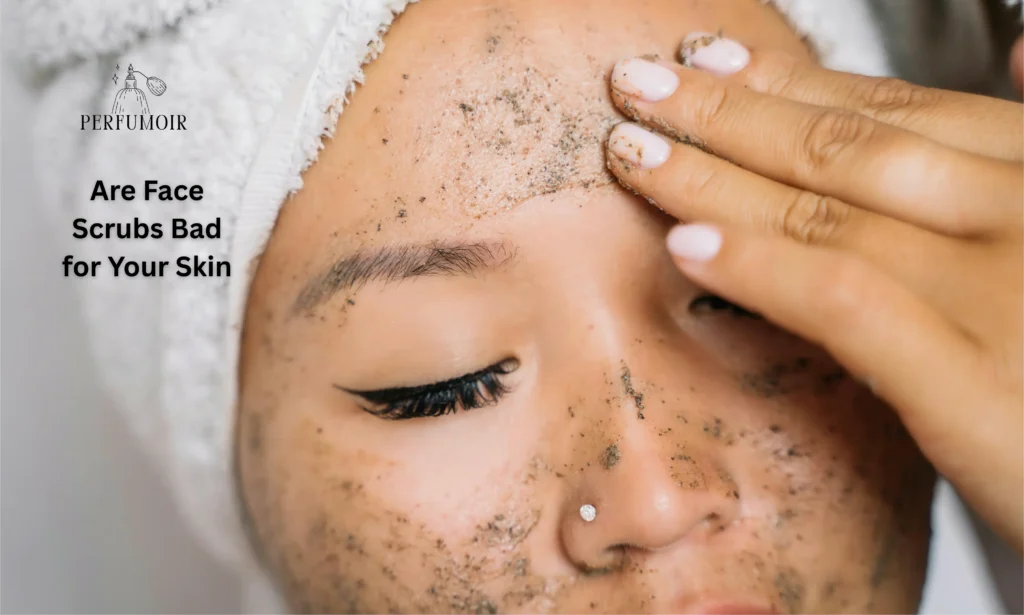
For three years in college, I used St. Ives Apricot Scrub every single morning. The rough particles felt satisfying, like I was scrubbing away all my problems along with dead skin. My face felt squeaky clean afterward, which I thought meant it was working. People complimented my “glow,” which I attributed to my daily scrubbing routine.
Then my skin completely fell apart. Constant redness, increased sensitivity, breakouts along my jawline, and that uncomfortable tight feeling all day. When I finally saw a dermatologist, she examined my face and asked what I’d been using. When I proudly mentioned my daily St. Ives ritual, she actually winced. “You’re creating micro-tears and destroying your skin barrier,” she said. “Stop immediately”.
Table of Contents
The Short Answer: Most Face Scrubs Are Too Harsh
After consulting three dermatologists and testing scrubs systematically, the consensus is clear. Physical scrubs with rough particles like ground walnut shells, apricot kernels, or large salt granules are too abrasive for facial skin and cause more harm than good.
Dr. Corey Hartman, board-certified dermatologist, explains that physical exfoliators using rough or larger particles can cause micro-tears at the skin’s surface. While these tears are invisible to the naked eye, they create entry points for bacteria, disrupt your skin barrier, and lead to irritation and breakouts.
This doesn’t mean all exfoliation is bad. The problem isn’t exfoliating itself, it’s how you do it. Gentle chemical exfoliants and ultra-fine physical scrubs work effectively without damaging skin when used properly. If scrubs are harsh, you might try how chemical exfoliation works for gentle skin renewal.
What Actually Happens When You Use Harsh Scrubs
During my six-week testing period with St. Ives Apricot Scrub daily, the damage progressed predictably.
- Week 1: My skin felt amazingly clean and smooth. That tight, squeaky clean feeling seemed like proof the scrub was working. I attributed the slight redness to “increased circulation.”
- Week 2: Small bumps appeared along my jawline. Redness persisted longer after washing. My skin felt more sensitive to other products, stinging when I applied toner or moisturizer.
- Week 3: Breakouts intensified. The bumps from week two developed into actual acne. My skin looked simultaneously dry and oily, tight but shiny by midday.
- Week 4: Visible flaking appeared on my cheeks despite using moisturizer. My skin barrier was clearly compromised. Products that never bothered me before now caused burning sensations.
- Week 5: My face hurt. Literally hurt to touch. The constant scrubbing had created such severe irritation that washing with even gentle cleanser felt uncomfortable.
- Week 6: I stopped early because the damage was obvious and getting worse. Redness, flaking, breakouts, sensitivity, and that terrible tight feeling dominated my skin’s condition.
Research backs up my experience. Studies show that physical irritation can trigger new breakouts or worsen existing acne, a phenomenon dermatologists call acne mechanica.
The Micro-Tear Problem
The biggest issue with harsh scrubs is micro-tears. These are microscopic injuries to your skin’s surface too small to see or feel initially but damaging over time.
Dr. Marisa Garshick, board-certified dermatologist, explains that scrubs made with large, irregularly shaped particles like salt or ground fruit pits can injure the skin barrier and cause micro-tears. These tears contribute to redness, irritation, and sensitivity.
The micro-tears create entry points for bacteria. This is why many people who start using harsh scrubs experience increased breakouts despite scrubbing away dirt. You’re essentially creating tiny wounds that invite infection.
Over time, repeated micro-tearing damages your skin barrier permanently. Your skin becomes chronically sensitive, reactive, and unable to retain moisture properly. This is what happened to me after three years of daily scrubbing.
Why Face Scrubs Feel So Good
The satisfying feeling of physical scrubs is precisely what makes them dangerous. That tight, clean sensation feels like deep cleaning, but it actually indicates you’ve stripped away protective oils and damaged your skin barrier.
When you scrub vigorously, you remove not just dead skin cells but also the natural oils and lipids your skin needs for protection. Your face feels oil-free temporarily, but your sebaceous glands respond by overproducing oil to compensate. This creates a cycle where you’re constantly stripping and your skin constantly overproduces.
The immediate “glow” after scrubbing comes from irritation and inflammation, not healthy skin. That redness and smoothness is essentially a controlled injury response. You’re damaging your skin and mistaking the inflammatory response for improvement.
I loved the feeling of St. Ives so much that I couldn’t believe it was harmful. The satisfying texture, the fresh scent, that squeaky clean result all fooled me into thinking I was doing something beneficial.
Not All Physical Exfoliants Are Evil
While harsh scrubs with large particles damage skin, not all physical exfoliation is problematic. The key is particle size and application technique.
Ultra-fine particles like jojoba beads, very fine pumice, or powder-based scrubs are much gentler. Dr. Marisa Garshick recommends that smaller, regularly shaped granules or powder-based scrubs tend to be safer options.
Gentle microdermabrasion products with extremely fine crystals can be effective when used sparingly. Some dermatologists even perform professional microdermabrasion, which uses controlled abrasion much gentler than drugstore scrubs.
The application technique matters enormously. Using dime-sized amounts with light fingertip pressure for 30 seconds maximum reduces damage significantly. Most people use too much product, scrub too vigorously, and continue for too long.
Chemical Exfoliants
After my scrub disaster, I switched to chemical exfoliants and never looked back. Chemical exfoliants using alpha hydroxy acids (glycolic acid, lactic acid) or beta hydroxy acids (salicylic acid) dissolve dead skin cells without physical abrasion.
These acids work by breaking down the bonds holding dead skin cells together, allowing them to shed naturally. There’s no scrubbing, no micro-tearing, and when used properly, significantly less irritation than physical scrubs.
I use Paula’s Choice 2% BHA Liquid Exfoliant three times weekly. It cleared my breakouts, smoothed my texture, and gave me that glow I thought required aggressive scrubbing. My skin has never looked better.
Chemical exfoliants can be used daily in mild concentrations or 2 to 3 times weekly for stronger formulas. They penetrate deeper than physical scrubs, unclog pores more effectively, and don’t damage your skin barrier when used correctly.
When Physical Scrubs Might Be Acceptable
Despite their problems, physical scrubs aren’t universally terrible. Used properly and sparingly, very gentle formulas can be safe.
Extremely gentle, fine-particle scrubs used once weekly with light pressure may not cause damage. Products with jojoba beads or ultra-fine grains are safer than walnut shell scrubs.
For body skin, not facial skin. Those rough scrubs that damage delicate facial skin work fine on thicker body skin like feet, elbows, and knees. Save your St. Ives for your heels.
With proper technique. If you must use physical scrubs, apply with barely any pressure, use fingertips only, limit to 30 seconds, and use lukewarm water with gentle upward motions.
But honestly, why risk it when chemical exfoliants exist and work better with less risk?
Conclusion
Face scrubs with rough, large particles like ground walnut shells or apricot kernels are too harsh for facial skin. They create micro-tears, damage your skin barrier, trigger breakouts through physical irritation, and cause chronic sensitivity over time.
The satisfying scrubbed feeling that seems like deep cleaning is actually your skin screaming in distress. That tight sensation indicates stripped protective oils, not cleanliness.
After six weeks of deliberate testing plus three years of unknowing damage, I learned this lesson permanently. Chemical exfoliants provide better results with dramatically less risk. Ultra-gentle physical scrubs with fine particles may be acceptable once weekly, but harsh drugstore scrubs belong in the trash.