“Perfume lasting power is something every fragrance lover eventually wonders about — why does the same bottle smell strong on one person and fade quickly on another?”
What Affects Perfume Lasting Power on Your Skin
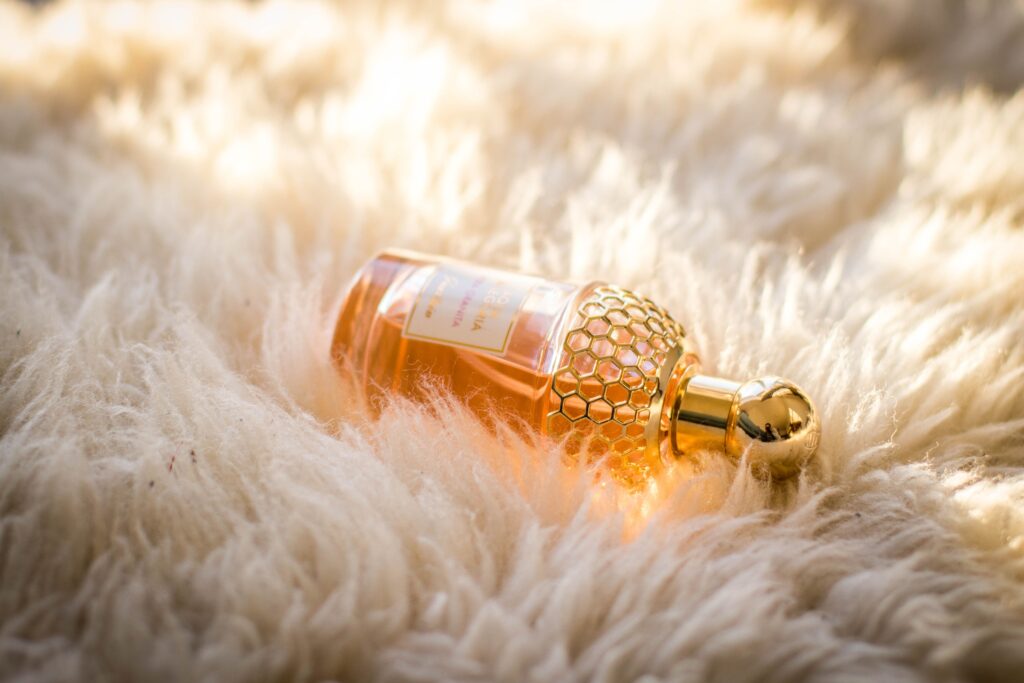
We tend to think of perfume the way we think of paint — apply it, and it should look (or smell) the same no matter where you put it. But skin is a living, chemically active surface, and it interacts with fragrance in ways that vary dramatically from person to person.
A few factors are doing most of the work behind the scenes:
Skin pH. Everyone’s skin sits somewhere on a slightly different pH scale, and that acidity or alkalinity changes how fragrance molecules break down over time. More acidic skin tends to speed up the evaporation of top notes, while more neutral or alkaline skin can let those same notes linger a little longer.
Skin type and oil production. This is the big one. Oilier skin acts like a natural fixative — fragrance molecules bind to the oils on the skin’s surface and evaporate more slowly, which is why perfume often lasts noticeably longer on oily or combination skin. Dry skin, on the other hand, has less natural oil to “hold onto” the scent, so fragrances tend to fade faster and can even smell thinner or more muted from the start.
Hydration levels. Well-moisturized skin holds fragrance better than dry, dehydrated skin. This is why the classic advice to “moisturize before you spray” isn’t just a marketing line — unscented lotion genuinely gives fragrance molecules something to cling to.
Body temperature and blood flow. Warmer skin — whether from body heat, weather, or even areas with more blood flow like the wrists and neck — releases fragrance molecules faster. That’s part of why perfume can smell stronger during a workout or on a hot day, but also why it may not last as long in those conditions.
Diet, hormones, and even medication. This one surprises people, but what’s going on inside your body shows up on your skin’s surface. Diet, hormonal changes, and certain medications can subtly shift your skin’s natural scent and oil composition, which in turn affects how a fragrance develops.
Why This Explains “Projection” Too
It’s not just about how long a scent lasts — it’s also about how far it travels, or what perfumers call “projection.” Oilier, warmer skin doesn’t just hold fragrance longer, it also tends to project it further, because more molecules are being released into the air around you at any given moment. Someone with drier skin might get a beautifully close, skin-like version of the same scent — noticeable up close, but far more intimate.
/Why Wearing Perfume Is Important (And Why You Should Never Skip It)
Neither is “better.” A fragrance that becomes a quiet signature on one person can be a bold statement on another, and that’s part of what makes perfume so personal.
What You Can Actually Do About It
While you can’t change your skin chemistry, you can absolutely work with it:
- Moisturize first. An unscented, fragrance-free lotion creates a better base for any perfume to cling to, especially if you have dry skin.
- Layer with matching products. Body washes, lotions, or oils in the same scent family can dramatically extend how long a fragrance lasts.
- Target pulse points, but don’t stop there. Wrists and neck are classic, but spraying on clothing or hair (fragrance-safe fabrics only) can extend longevity since fabric holds scent longer than skin does.
- Don’t rub your wrists together. This is a small habit that actually breaks down top notes faster and can throw off how a fragrance develops.
- Test before you commit. If a fragrance smells incredible on a friend but you’re not sure how it’ll behave on you, try a sample first rather than buying a full bottle based on someone else’s experience.
The Takeaway
If a perfume doesn’t last as long on you as it does on someone else, it doesn’t mean the fragrance is “wrong” for you or that the quality is off — it just means your skin is telling its own version of the story. Understanding your skin type is really the first step to finding fragrances that truly work with you, not against you.