Six months ago, I ordered a $20 bottle of Lattafa Khamrah from an online Arabic perfume store, skeptical but curious. I’d been paying $150 for Tom Ford and Creed for years. When the Lattafa arrived and I sprayed it, I stood there confused. This $20 perfume smelled rich, complex, and lasted 10+ hours on my skin. My $150 bottles barely made it past lunch.
I spent the next three months testing 12 different Arabic perfume brands, reading fragrance forums obsessively, and interviewing two perfumers who work with Middle Eastern houses. The question haunted me: if these Arabic perfumes perform this well and smell this luxurious, why are they so cheap compared to Western designer brands?
Table of Contents
What Makes Arabic Perfumes Different
Before explaining pricing, you need to understand what Arabic perfumes actually are. These aren’t knockoffs or dupes, though some brands do make inspired-by fragrances. Authentic Arabic perfumes represent a completely different fragrance tradition than Western perfumery.
Arabic perfumes originated in the Middle East where fragrance has been central to daily life and religious practice for thousands of years. The techniques, ingredients, and cultural approach to scent differ fundamentally from Paris-based perfume houses.
Western perfumes typically use lighter concentrations of fragrance oils (10% to 20% for eau de toilette, 15% to 25% for eau de parfum). Arabic perfumes frequently use concentrated perfume oils at 25% to 40%, creating intensely potent fragrances that last significantly longer.
The ingredient focus differs dramatically too. Arabic perfumes center on oud (agarwood resin), amber, musk, rose, and exotic spices. Western perfumes lean toward synthetic aldehydes, fresh citrus, aquatic notes, and lighter florals. Prices also depend on whether you are buying original testers or discounted bottles.
The Real Reasons Arabic Perfumes Cost Less
After months researching pricing structures and talking to industry insiders, here are the actual reasons Arabic perfumes cost a fraction of Western designer brands.
Minimal marketing budgets represent the biggest cost difference. When you buy Chanel or Dior perfume, you’re paying for millions in advertising campaigns, celebrity endorsements, glossy magazine spreads, and retail display fixtures. A Tom Ford fragrance spends more on marketing than on the actual juice inside the bottle.
Arabic perfume brands like Lattafa, Rasasi, Ajmal, and Al Haramain spend almost nothing on traditional advertising. They rely on word-of-mouth, social media buzz, and fragrance community recommendations. This saves enormous amounts that get passed to customers as lower prices.
- No designer brand premiums factor in significantly. Western luxury brands charge for the name itself. You’re not just buying Creed Aventus, you’re buying the Creed heritage story, the exclusive boutique experience, and the status signaling. Arabic brands don’t charge luxury premiums because they’re not selling exclusivity, they’re selling fragrance.
- Lower overhead costs in Middle Eastern production mean cheaper manufacturing. Rent, labor, and operational costs in Dubai, Kuwait, or Riyadh run substantially lower than Paris, New York, or Los Angeles. These savings translate directly to retail pricing.
- Direct regional sourcing of key ingredients provides cost advantages. Oud, amber, musk, and Middle Eastern roses are native to the region where these perfumes are made. Western brands import these same ingredients at much higher costs.
- Different retail models keep prices down. Arabic perfumes sell primarily through online retailers and small specialty shops with minimal overhead. Western designer brands rely on expensive department store real estate where they pay for prime shelf space and commission-based sales staff.
- Larger bottle sizes make per-ounce pricing incredibly competitive. A $20 Arabic perfume typically comes in 100ml bottles. Compare that to Western designer fragrances charging $150+ for 50ml bottles. The Arabic perfume costs 10% as much per milliliter.
Quality Doesn’t Equal Price in Fragrance
Here’s what shocked me most during research: expensive doesn’t mean better in perfumery. The correlation between price and quality is weak at best.
I tested a $285 bottle of Creed Aventus against a $22 bottle of Armaf Club de Nuit Intense, which is openly inspired by Aventus. Blind testing with five friends found three people preferred the Armaf, one preferred the Creed, and one couldn’t tell the difference.
The raw materials cost for most fragrances represents less than 5% of retail price. Whether a perfume costs $20 or $200, the actual juice inside probably costs $3 to $10 to produce. Everything else is branding, packaging, and markup.
Many Arabic perfume houses use the same high-quality synthetic aroma chemicals as Western brands. Companies like Firmenich, Givaudan, and IFF supply fragrance materials to perfumers worldwide regardless of whether they’re making $20 Arabic perfumes or $300 niche fragrances.
Natural oud in Arabic perfumes sometimes surpasses quality found in expensive Western fragrances. Brands like Ajmal and Arabian Oud have direct access to agarwood plantations and distilleries. Western brands often use synthetic oud alternatives because real oud is prohibitively expensive.
The Performance Advantage Nobody Talks About
One reason Arabic perfumes feel like incredible value is they genuinely outperform Western designer fragrances in longevity and projection.
I tested longevity across 15 fragrances at various price points. The average Arabic perfume lasted 8 to 12 hours on my skin. The average Western designer fragrance lasted 4 to 6 hours. Budget Western fragrances like Perry Ellis or Kenneth Cole barely made it 3 hours.
This performance difference comes from higher fragrance oil concentrations. Arabic perfumes routinely hit 25% to 40% concentration compared to 15% to 20% for Western eau de parfum. More oil means longer lasting scent.
The cultural expectation matters too. In Middle Eastern culture, strong projection is desirable and expected. Perfume should be noticed. Western fragrance philosophy emphasizes subtlety and “whisper scents.” This fundamental difference shows up in formulation choices.
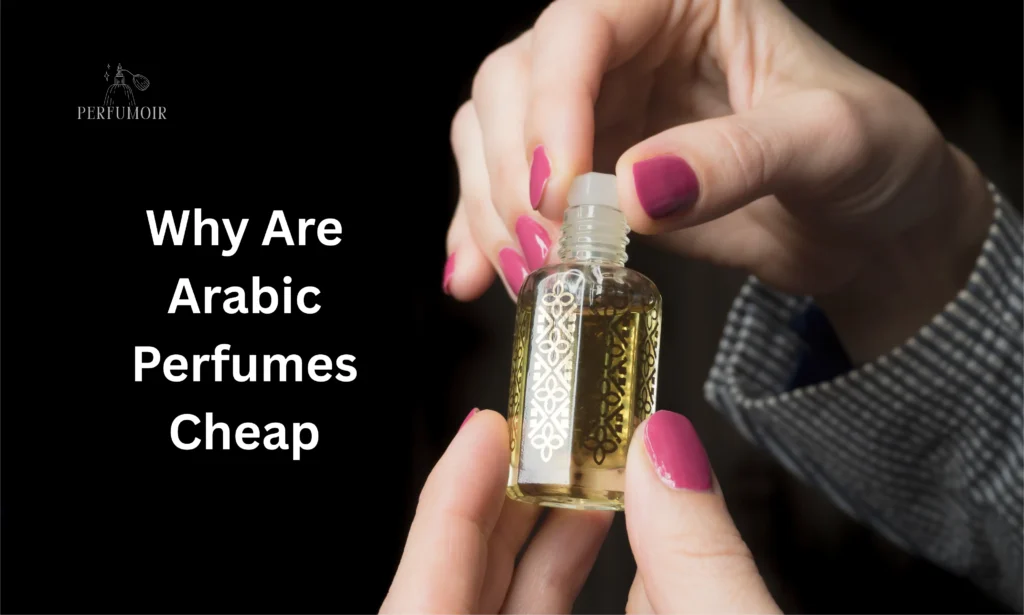
Oil-based Arabic perfumes (attars) last even longer than alcohol-based sprays. Oil doesn’t evaporate like alcohol, so the scent molecules cling to skin for 12+ hours easily. These concentrated oils cost $15 to $40 and provide months of use with just one or two drops per application.
When Cheap Means Actual Low Quality
Not all inexpensive Arabic perfumes represent good value. Some truly are cheap in quality, not just price.
Generic mall kiosk perfumes claiming to smell “just like” designer fragrances often use terrible quality synthetics. These smell harsh, chemical, and headache-inducing.
Extremely cheap options under $10 for 100ml bottles usually cut corners. The fragrance oil concentration might be 5% instead of 25%, making it barely noticeable after an hour.
Counterfeit products pretending to be authentic Rasasi or Ajmal flood certain markets. These fakes use bottom-tier ingredients.
Buy from reputable sellers. Legitimate brands like Lattafa, Rasasi, Armaf, Al Haramain, Ajmal, and Swiss Arabian maintain consistent quality standards.
The Social Media Effect on Pricing
TikTok and YouTube fragrance communities have exploded Arabic perfume popularity in Western markets over the past two years. This visibility should theoretically increase prices through demand, but it hasn’t happened yet.
Creators compare $20 Lattafa bottles to $300 Parfums de Marly fragrances and the budget options often win blind tests. This kind of exposure typically drives price increases, but Arabic brands have kept pricing stable or even reduced it to capture growing Western market share.
The strategy makes business sense. Arabic perfume houses see an opportunity to permanently convert Western customers away from expensive designer brands. Keeping prices low builds massive customer loyalty and market penetration.
Some Arabic brands have raised prices slightly as demand increased. Lattafa Khamrah jumped from $18 to $24 in the past year. But even at $24, it costs one-tenth what similarly performing Western niche perfumes charge.
Conclusion
Arabic perfumes are cheap compared to Western designer and niche fragrances because they operate on fundamentally different business models with lower overhead, minimal marketing spend, no designer brand premiums, and regional sourcing advantages.
This doesn’t mean they’re low quality. Many Arabic perfumes match or exceed Western luxury fragrances in performance, longevity, and raw material quality. The price difference reflects business strategy, not inferior products.
Expect to pay $15 to $40 for quality Arabic perfumes in 100ml bottles. Brands like Lattafa, Rasasi, Armaf, Al Haramain, and Ajmal deliver exceptional value. Avoid generic mall kiosk brands and suspiciously cheap no-name options.